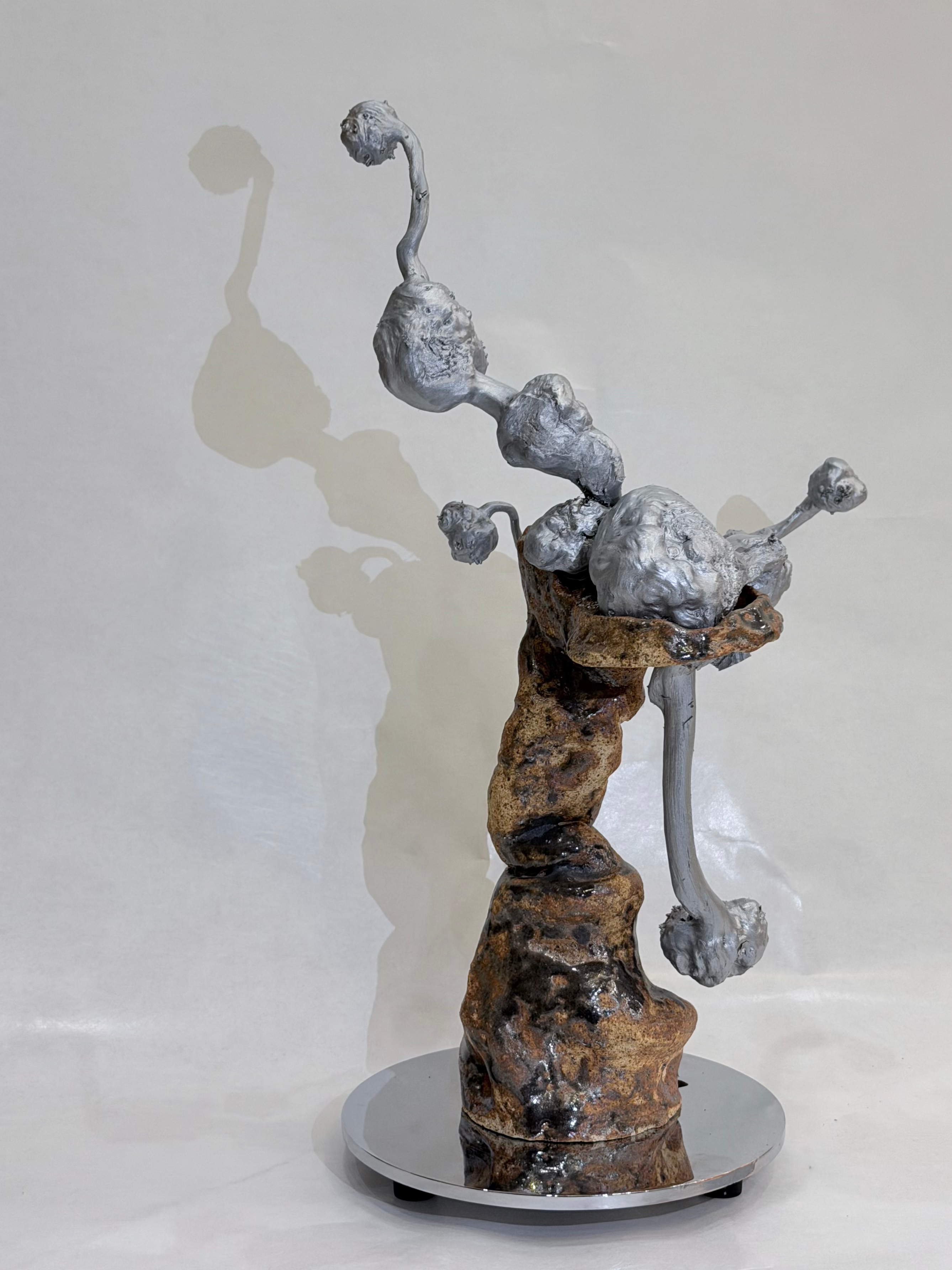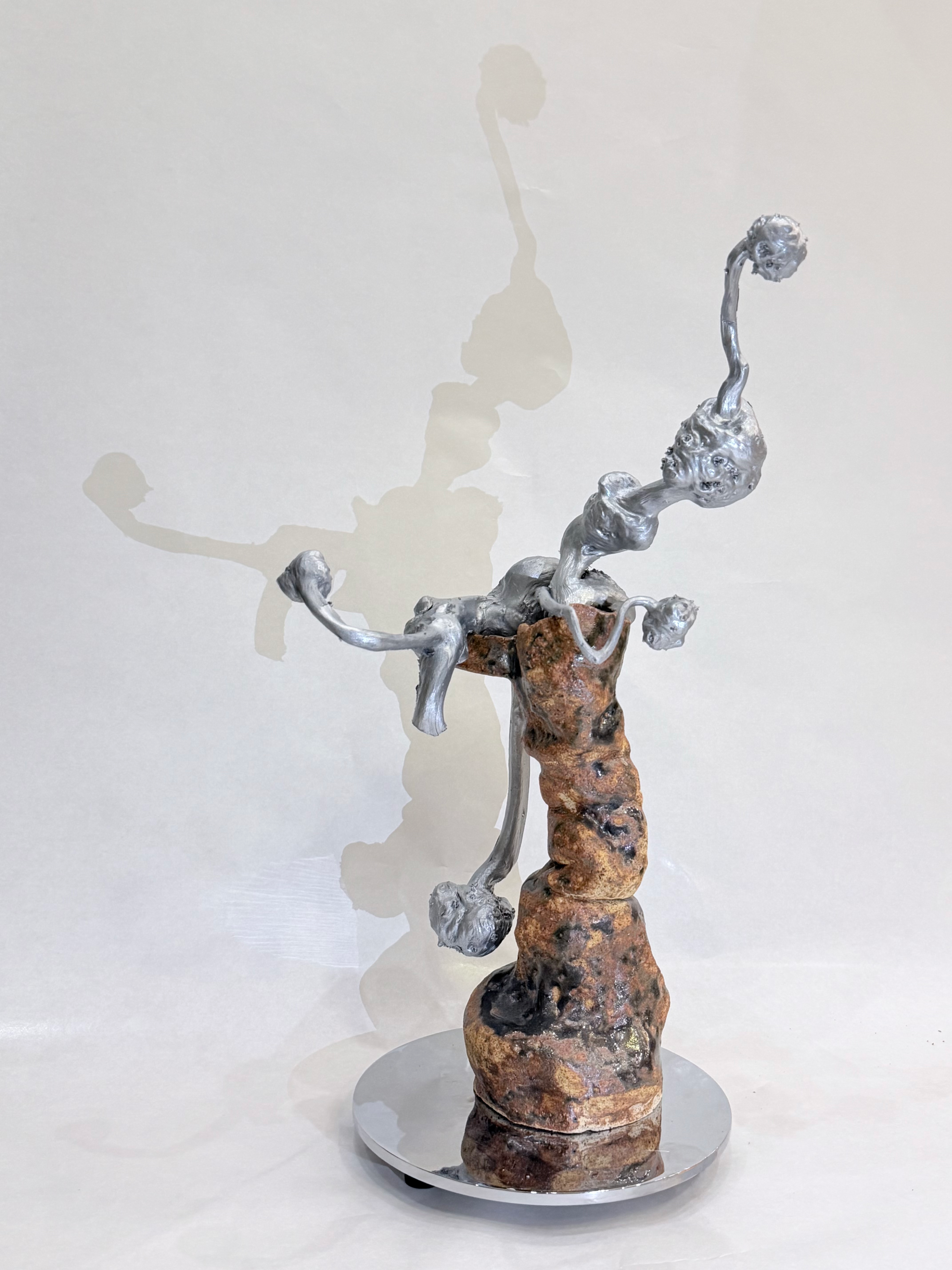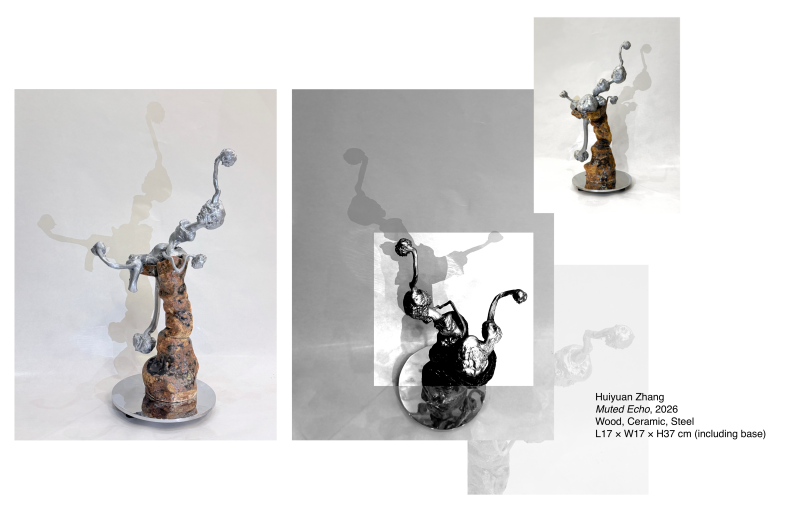
Muted Echo
Under the framework of "Rhizomatic Thinking" proposed by the French philosopher Gilles Deleuze, trees are understood as sentient entities with their own capacities for perception and response. Their growth no longer unfolds around a single center, but instead extends, interweaves, and reorganizes across multiple relations.
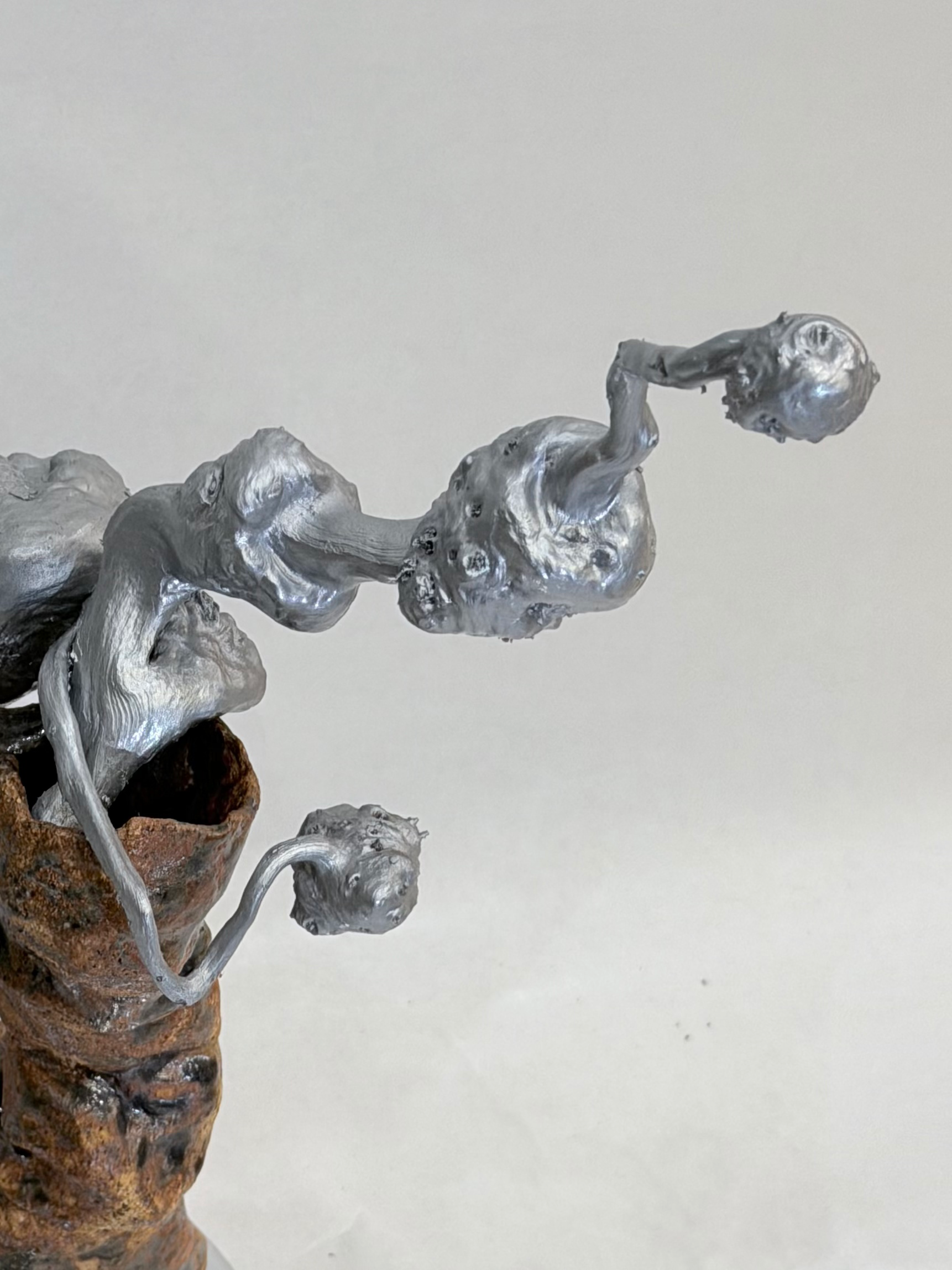
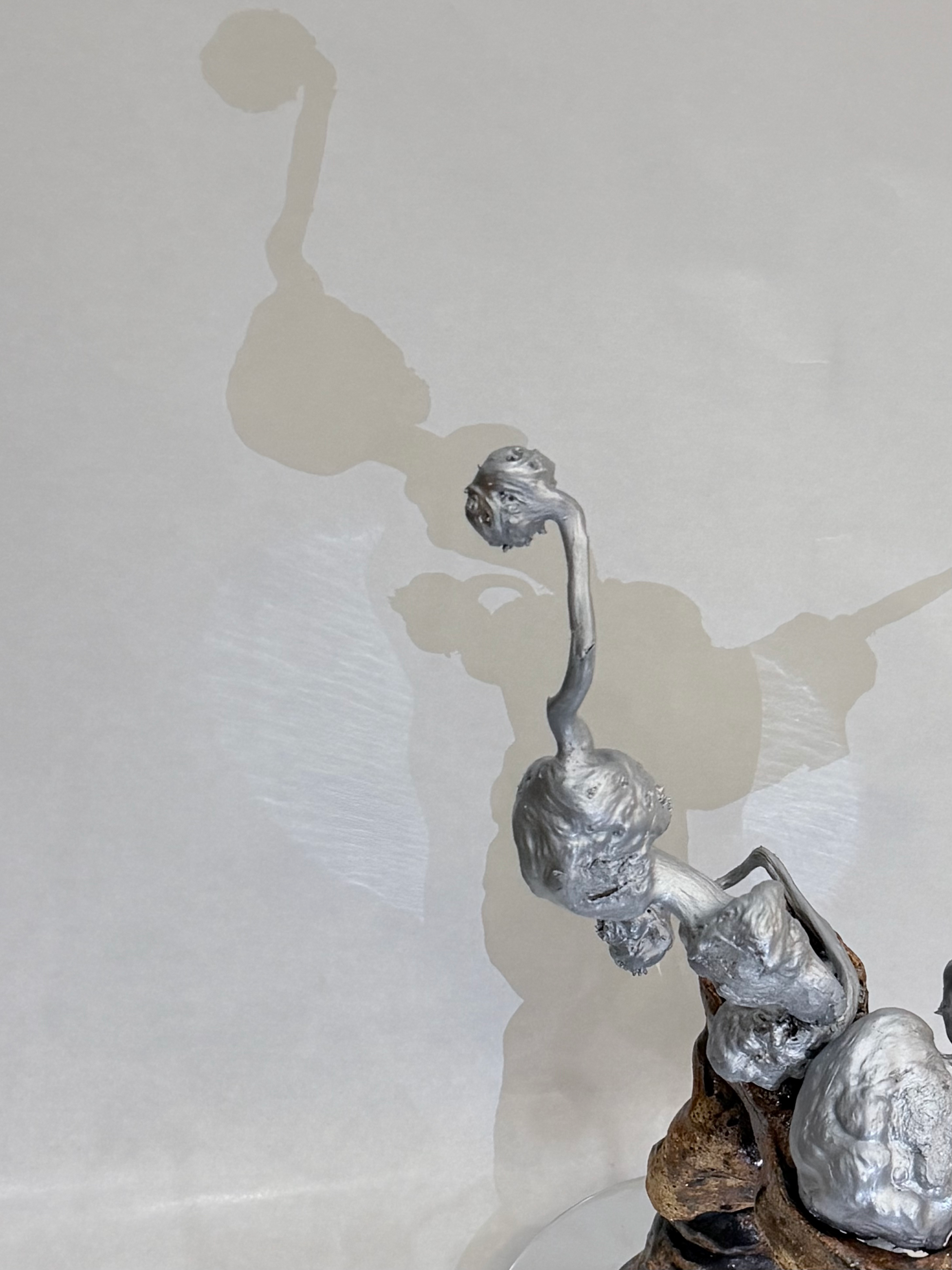
In this context, the burl emerges as an "event" within such a network — not an anomaly, but a slow response to external disturbances, a morphological echo accumulated over time. The work reconstructs this logic of growth through ceramic, overlaid with an electroplated, industrial-like surface. This intervention brings the organically generated form into tension with the language of human industry.
The distorted and proliferating structure resembles a disrupted frequency, reverberating through an ecological network — at once connected to the invisible exchanges among soil, microorganisms, and environment, while also exposing how human desire infiltrates and rewrites these systems of coexistence.
Here, the tree is no longer a passive object of observation, but a responsive subject that speaks through deformation and proliferation. Its silent form becomes a cross-species expression, allowing the viewer to attune to resonance, interdependence, and imbalance within a non-human temporal scale.